







LED Studio Lights for Broadcast and Film: Why Broadcast-Grade Specs Matter More Than Wattage

Thursday, 12/4/2025

Walk into any professional television studio, film production facility, or live streaming setup and you'll notice something immediately: the lighting looks different from what you'd find in a standard office or event venue. Colors are accurate. Skin tones look natural. There's no visible flicker when you hold up a phone camera. Shadows are controlled. The overall effect feels intentional rather than incidental.

None of that happens by accident, and none of it comes from choosing a generic LED panel based on lumen output and price per unit. Broadcast and film lighting operates to a different set of requirements — and understanding those requirements is the difference between a studio that looks professional on camera and one that looks like it was lit by an afterthought.

This guide covers the specifications that actually matter for broadcast and film studio lighting, why they matter, and what to look for when sourcing LED studio lights for professional production environments.

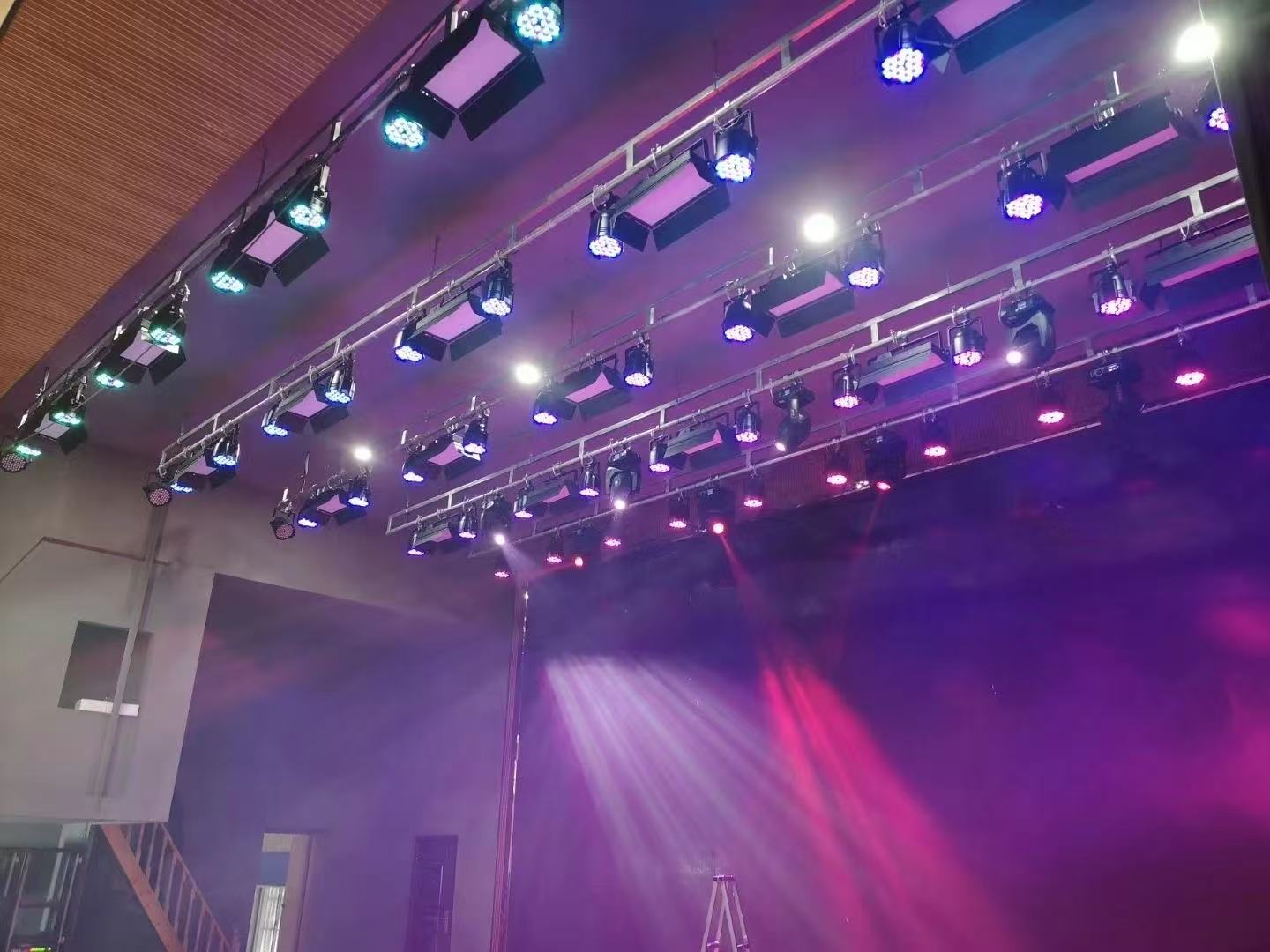
led panels for stage


Why broadcast lighting is a different category

A lighting fixture used in a warehouse, office, or retail environment has one primary job: produce enough light for people to see clearly and work comfortably. Color accuracy, flicker behavior at camera frame rates, and precise color temperature consistency are secondary considerations at best.

In a broadcast or film environment, the camera is the primary audience. Everything the lighting does is evaluated through the lens — and cameras are considerably less forgiving than the human eye when lighting is imprecise.

A fixture with slightly inconsistent color output looks fine to a person standing in the room. On a high-definition camera, that inconsistency becomes visible color casts on skin, mismatched backgrounds, and continuity problems between shots. A fixture with imperceptible flicker at normal viewing looks perfectly steady to a human observer. At 60fps, 120fps, or higher frame rates increasingly common in broadcast and streaming production, that flicker becomes visible banding across the frame.

The result is that broadcast and film lighting procurement requires a different set of evaluation criteria — and fixtures that don't meet those criteria cannot be compensated for in post-production without significant additional cost and time.


led flat panel light fixture


CRI and TLCI: the two numbers that define broadcast suitability

Color Rendering Index (CRI) and Television Lighting Consistency Index (TLCI) are the two primary metrics for evaluating whether a light source renders color accurately in a broadcast context.

CRI measures how accurately a light source renders colors compared to a reference light source, on a scale from 0 to 100. A CRI of 100 means perfect color rendering — colors appear exactly as they would under ideal daylight or incandescent reference conditions. For broadcast and film applications, CRI 90 is generally the accepted minimum. At CRI 90 and above, color rendering is accurate enough for most production requirements. Below CRI 90, color inaccuracies become visible on camera, particularly in skin tones and saturated colors.

TLCI is a more recent metric developed specifically for broadcast applications. Where CRI uses a human observer as the reference, TLCI uses a camera sensor as the reference — making it a more directly relevant measure for broadcast lighting. A TLCI of 85 is the typical broadcast minimum. TLCI 90 and above is considered broadcast-grade. Premium studio fixtures achieve TLCI 95 and above, which is the standard for demanding broadcast environments including live news, drama production, and high-end commercial work.

When evaluating LED studio lights for broadcast use, both numbers matter. A fixture with high CRI but lower TLCI may look good to the human eye but perform poorly on camera. Specify both metrics and treat them as hard minimums rather than aspirational targets.

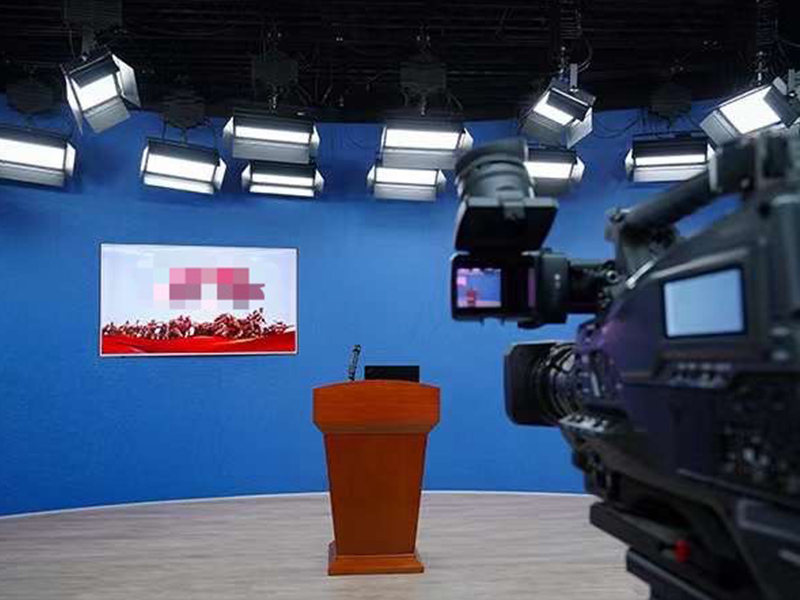
suitable for tv studio brightest led studio light


Flicker: the problem that ruins footage

Flicker is the most technically misunderstood issue in broadcast lighting. Most LED fixtures available on the general market are described as "flicker-free" — but this claim requires careful scrutiny in a broadcast context.

All LED fixtures driven by AC power have some degree of light output variation at multiples of the supply frequency. In markets with 50Hz power supply, this means 100Hz variation. In 60Hz markets, 120Hz. At these frequencies, the variation is invisible to the human eye — which is why "flicker-free" claims are technically defensible for general lighting applications.

Camera sensors at high frame rates do not integrate light the same way human vision does. A camera shooting at 120fps with a fast shutter speed captures individual slices of time that may coincide with the low points in a flickering light source's output cycle. The result is visible banding, brightness variation between frames, or complete frame-to-frame inconsistency that makes footage unusable.

Broadcast-grade LED studio fixtures address this through high-frequency constant-current drivers that maintain output consistency well above the rates detectable by any camera. When sourcing LED studio lights for broadcast use, request specific flicker frequency data rather than accepting a general "flicker-free" claim. The driver technology inside the fixture is what determines broadcast suitability, not the LED chips themselves.


led flat panel light fixture


Color temperature: accuracy, range, and consistency across units

Professional studio lighting requires precise color temperature control for two distinct reasons: matching to other light sources in the environment, and maintaining consistency across multiple fixtures used simultaneously.

Matching to other sources is the practical requirement for any mixed lighting environment. A studio using LED panels alongside daylight from windows, practical fixtures, or other light sources needs the LED fixtures to hit specific color temperatures accurately — not approximately. A fixture claiming 5600K output that actually measures 5400K creates a visible color mismatch that requires correction either through filtration or in post-production.

Consistency across units is equally important for studio use. When multiple fixtures illuminate the same subject — a news anchor, a product shot, an interview setup — color temperature variation between units creates visible inconsistency that cannot be corrected without affecting other elements in the frame. Broadcast-grade LED studio fixtures maintain tight color temperature tolerance across units from the same batch and across dimming ranges.

The dimming behavior of color temperature is a specific consideration often overlooked in procurement. Many LED fixtures shift color temperature as they dim — warmer at lower output levels, cooler at higher output. For broadcast applications where consistent color is required at varying intensity levels, specify fixtures with color temperature stability across the full dimming range.

A wide color temperature range — typically 2800K to 6500K or broader — gives studio operators the flexibility to match any source or creative requirement. Linear adjustment across this range, without steps or jumps, allows precise matching to reference conditions.

Silent operation: the requirement that separates studio lights from event lights

Event lighting operates in environments where ambient noise is high — music, crowd noise, mechanical effects. Fan noise from high-power fixtures is imperceptible in these contexts.

A broadcast studio or film set is a controlled acoustic environment. Dialogue recording, ambient sound capture, and live broadcast audio all require background noise levels that are incompatible with active fan cooling in nearby fixtures. A fixture with an audible cooling fan positioned above a news desk, interview chair, or film set contaminates every audio recording made in that space.

Broadcast-grade LED studio lights use passive thermal management — convection cooling through heat sink structures — rather than active fan cooling. The fixture produces no mechanical noise during operation, making it suitable for any acoustically sensitive production environment.

For facilities operating both studio and event spaces, silent operation is also a practical advantage in multi-purpose rooms where the lighting rig serves both broadcast recording and live events. A single fixture that performs correctly in both contexts simplifies inventory and reduces the need for separate lighting systems.

Dimming performance: why 32-bit matters for broadcast

Dimming in broadcast and film lighting is not a simple on/off or rough intensity control. Lighting designers and directors of photography use precise dimming to shape scenes, create depth, separate subjects from backgrounds, and match exposure to camera settings.

Coarse dimming — fixtures with 8-bit or limited resolution — produces visible steps in output when moving through the lower dimming range. On camera, these steps appear as sudden brightness jumps rather than smooth transitions. For any production involving live dimming cues, smooth dimmer rides, or automated lighting changes captured on camera, low-resolution dimming is a visible production problem.

High-resolution dimming — 16-bit or 32-bit — provides smooth, linear output control from full intensity to the lowest usable level without visible stepping. For broadcast and film applications, specify high-resolution dimming as a minimum requirement and verify the behavior specifically at low dimming levels, where stepping artifacts are most visible.


VANRAY LED studio lights for broadcast and film

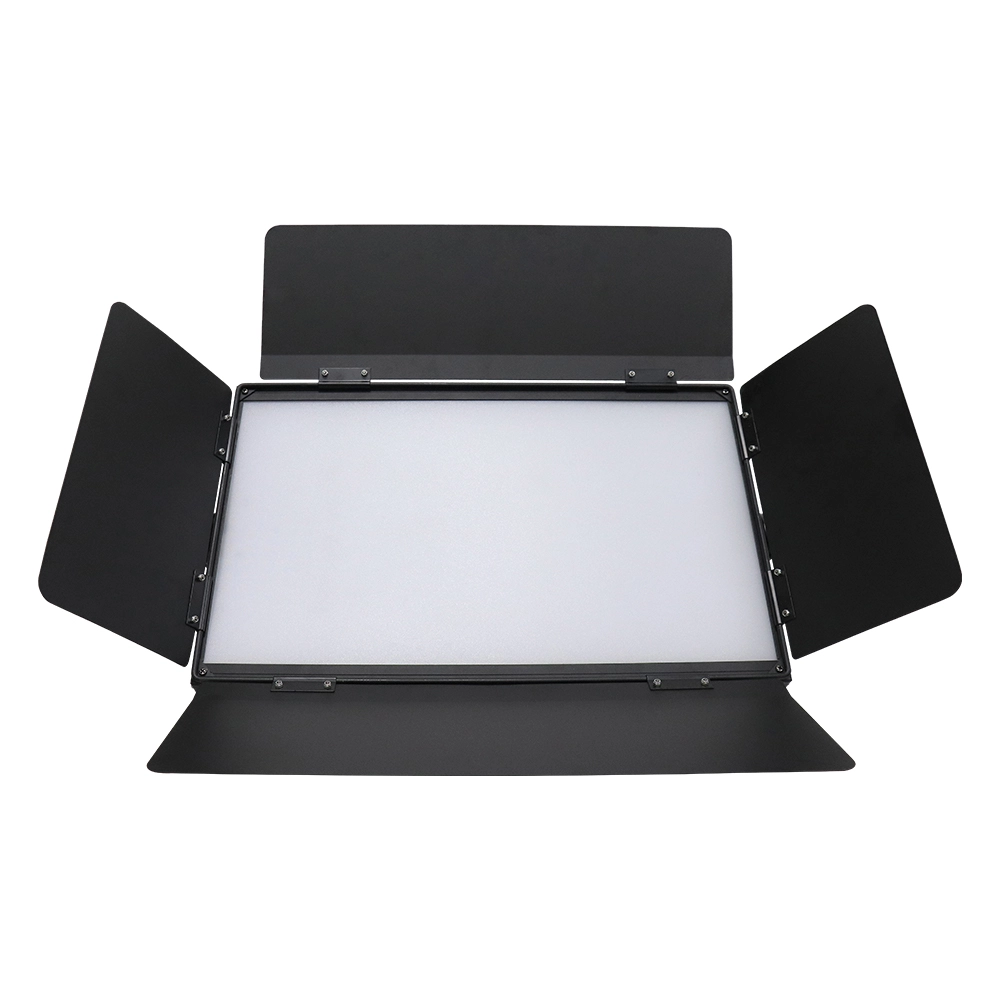
VANRAY's LED studio light range is engineered specifically for broadcast, film, and professional production environments. Our panel fixtures deliver the broadcast-critical specifications — high CRI and TLCI ratings, flicker-free constant-current drivers, wide color temperature range with linear adjustment, silent passive cooling, and high-resolution dimming — that professional production facilities require.

Key specifications across our studio light range include CRI 90+ and TLCI ratings suitable for broadcast applications, color temperature adjustment from 2800K to 6500K with stable output across the dimming range, completely silent operation for acoustically sensitive environments, and high-resolution dimming for smooth, camera-ready intensity control.

For production companies, broadcast facilities, and studio operators sourcing LED studio lights for professional use, our team provides full technical documentation including CRI and TLCI measurement data, flicker frequency specifications, and photometric files for pre-installation planning.

Contact our team at vanraylighting.com for product specifications, project consultation, and bulk pricing.


FAQ

What is the minimum CRI and TLCI I should specify for a broadcast studio?

CRI 90 and TLCI 85 are the accepted minimums for broadcast applications. For demanding production environments — live news, drama, high-end commercial — CRI 95 and TLCI 90 or above is the appropriate specification. Always request measured data rather than estimated ratings.

How do I verify that a fixture is genuinely flicker-free at broadcast frame rates?

Request the driver frequency specification from the manufacturer — broadcast-grade fixtures operate at frequencies well above the 100Hz or 120Hz supply frequency. If a manufacturer cannot provide this data, the fixture has not been tested for broadcast suitability. Test footage shot at your highest intended frame rate with a fast shutter speed is the definitive verification.

Can LED studio lights be used alongside daylight from windows?

Yes, provided the fixture can be set accurately to match the daylight color temperature — typically 5600K to 6500K depending on conditions and time of day. Fixtures with wide, continuously variable color temperature ranges handle mixed daylight environments most effectively.

Does color temperature shift when dimming LED studio lights?

Lower-quality LED fixtures do shift color temperature as they dim. Broadcast-grade fixtures maintain color temperature stability across the dimming range through active color management in the driver. This should be verified before specifying for broadcast use — request data on color temperature deviation across the dimming range.

What control protocols do VANRAY LED studio lights support?

 Our studio light range supports DMX-512 for console integration, with 0–10V analog control and manual panel control available depending on the model. For larger studio installations requiring network control, consult our technical team for protocol options. Contact us at vanraylighting.com.

Are VANRAY LED studio lights suitable for both broadcast studios and film sets?

Yes. The combination of high CRI and TLCI, flicker-free operation, silent cooling, and precise color temperature control makes our studio lights suitable for any camera-facing professional production environment — broadcast studios, film sets, photography studios, live streaming facilities, and corporate video production.


VANRAY Lighting supplies professional LED studio lights for broadcast facilities, film production companies, and professional studio operators. Factory-direct pricing, full technical documentation, and project specification support. Visit vanraylighting.com.

Tags
Recommended for you
led cob lights price - Vanray

COB Stage Lights: Why High-Output COB Fixtures Are Replacing Multi-Chip Arrays in Professional Production

COB Stage Lights: Why High-Output COB Fixtures Are Replacing Multi-Chip Arrays in Professional Production
gobo light - Vanray

Gobo Projector Lights for Stage: What They Do and How to Choose the Right Model for Your Application

Gobo Projector Lights for Stage: What They Do and How to Choose the Right Model for Your Application
strobe lights in concerts - Vanray

LED Strobe Lights for Stage: What Wholesale Buyers Need to Know Before Placing a Bulk Order

LED Strobe Lights for Stage: What Wholesale Buyers Need to Know Before Placing a Bulk Order
Silver projector on a tripod - Vanray

Follow Spot Lights for Live Events: What Bulk Buyers Need to Evaluate Before Sourcing

Follow Spot Lights for Live Events: What Bulk Buyers Need to Evaluate Before Sourcing
rgbw led wall washer - Vanray

LED Wall Washer Lights: What Bulk Buyers Need to Evaluate Before Placing a Large Order

LED Wall Washer Lights: What Bulk Buyers Need to Evaluate Before Placing a Large Order
You may also like
suitable for meeting room led light studio professional fixtures - Vanray

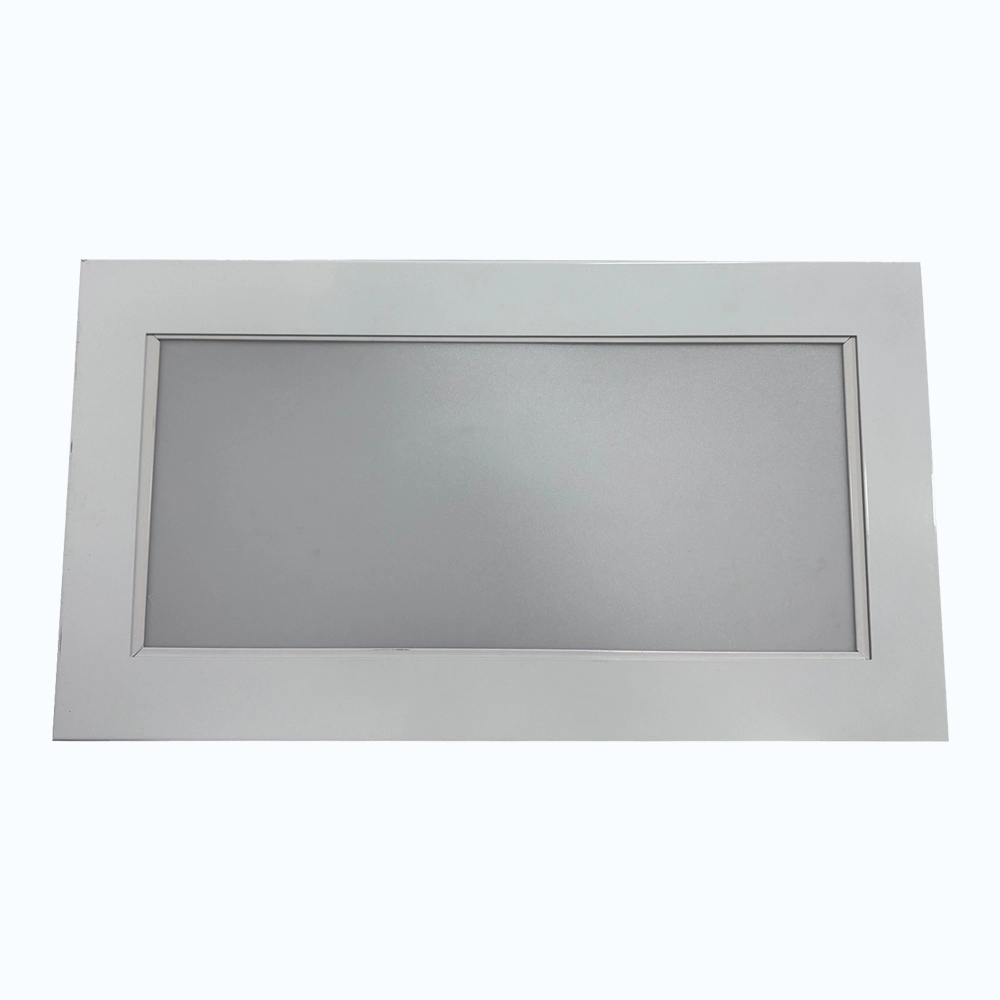
VANRAY LED Studio Light SJL-600 300W LED Panel Light

VANRAY LED Studio Light SJL-600 300W LED Panel Light
led studio light - Vanray

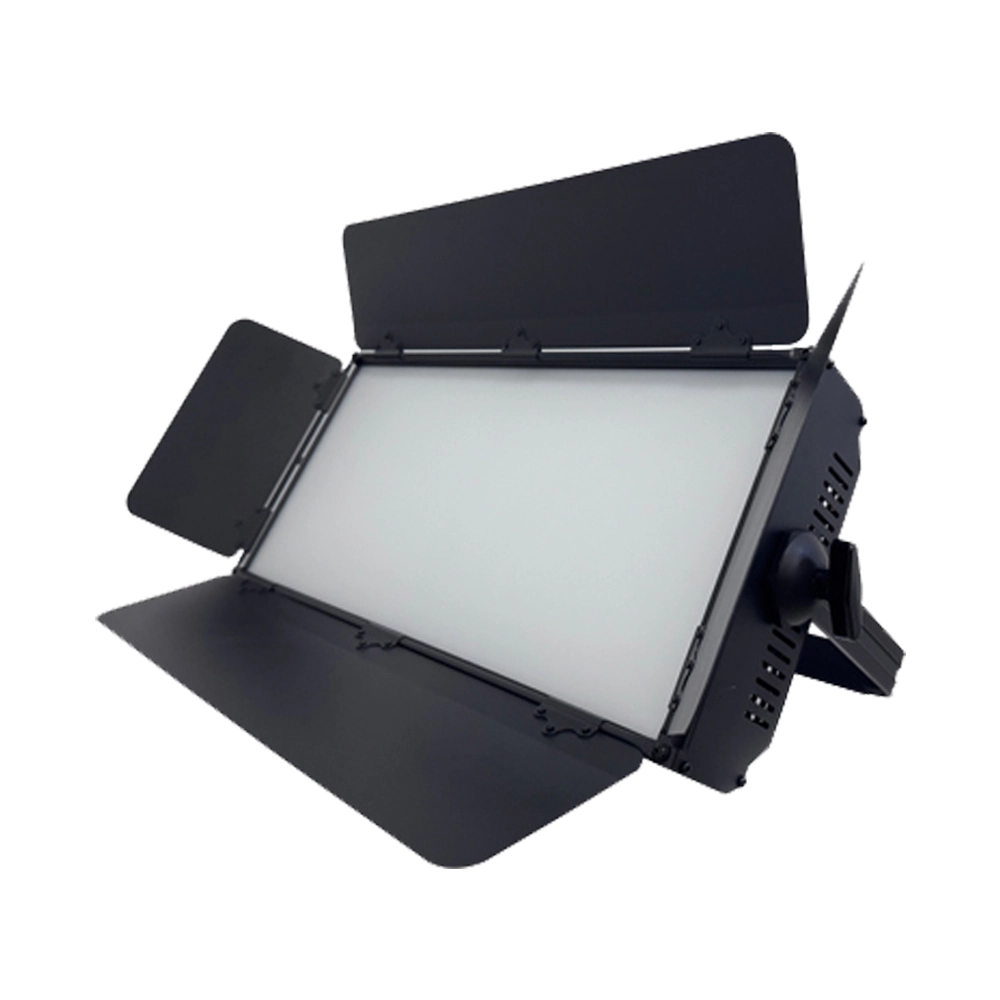
VANRAY LED Embedded Meeting Light SJL-288Q LED Meeting Light led studio light

VANRAY LED Embedded Meeting Light SJL-288Q LED Meeting Light led studio light
a1b8b3ebd1c197accdcfe80bdb2ee71 - Vanray

VANRAY LED Panel for Stage SJL-288 150W LED Studio Light for Meeting Room and Stage

VANRAY LED Panel for Stage SJL-288 150W LED Studio Light for Meeting Room and Stage
best studio led light - Vanray

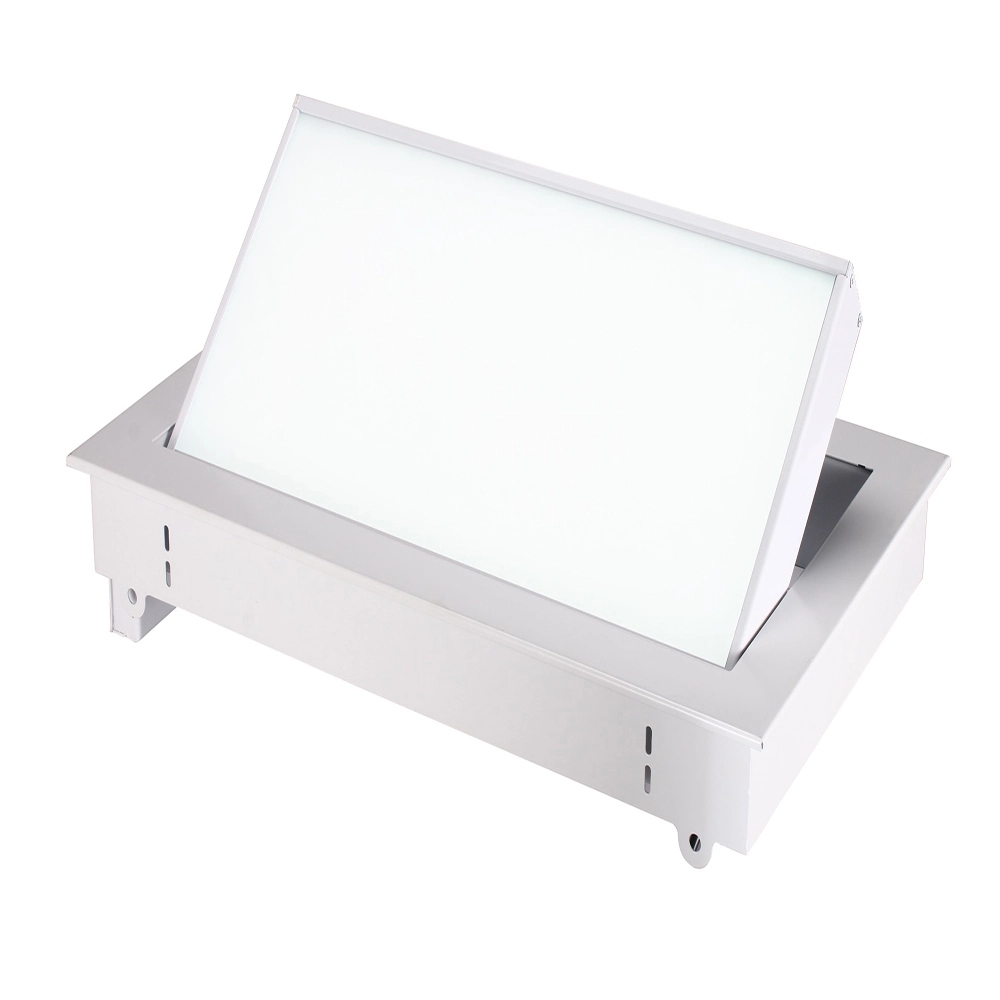
VANRAY LED Panel Indoor SJL-200Q LED Electronic Meeting Light LED Studio Light

VANRAY LED Panel Indoor SJL-200Q LED Electronic Meeting Light LED Studio Light

Get in Touch With VANRAY

Create unforgettable stage moments with our advanced lighting solutions!

Contact us now by filling out the form below or calling us directly to begin your lighting journey!

Name must not exceed 100 characters.
Invalid email format or length exceeds 100 characters. Please re-enter.
Please enter a valid phone number!
Company Name must not exceed 150 characters.
Content must not exceed 3000 characters.
Contact customer service

Contact VANRAY

Hi,

If you are interested in our products, customized or have any doubts, please be sure to let us know so that we can help you better.

×
Name must not exceed 100 characters.
Invalid email format or length exceeds 100 characters. Please re-enter.
Please enter a valid phone number!
Company Name must not exceed 150 characters.
Content must not exceed 3000 characters.

Get a free quote

Hi,

If you are interested in our products, customized or have any doubts, please be sure to let us know so that we can help you better.

×
Name must not exceed 100 characters.
Invalid email format or length exceeds 100 characters. Please re-enter.
Please enter a valid phone number!
Company Name must not exceed 150 characters.
Content must not exceed 3000 characters.

Send my request

Hi,

If you are interested in our products, customized or have any doubts, please be sure to let us know so that we can help you better.

×
Name must not exceed 100 characters.
Invalid email format or length exceeds 100 characters. Please re-enter.
Please enter a valid phone number!
Company Name must not exceed 150 characters.
Content must not exceed 3000 characters.

Get your FREE ticket

Get your FREE ticket to explore the latest innovations and connect with industry leaders! Limited slots available — contact us now to secure yours!

×
Name must not exceed 100 characters.
Invalid email format or length exceeds 100 characters. Please re-enter.
Please enter a valid phone number!
Company Name must not exceed 150 characters.
Content must not exceed 3000 characters.

Upcoming Exhibitions

Integrated Systems Europe (ISE) in Barcelona

Booth: 8M250

Date: 3-6 February 2026